



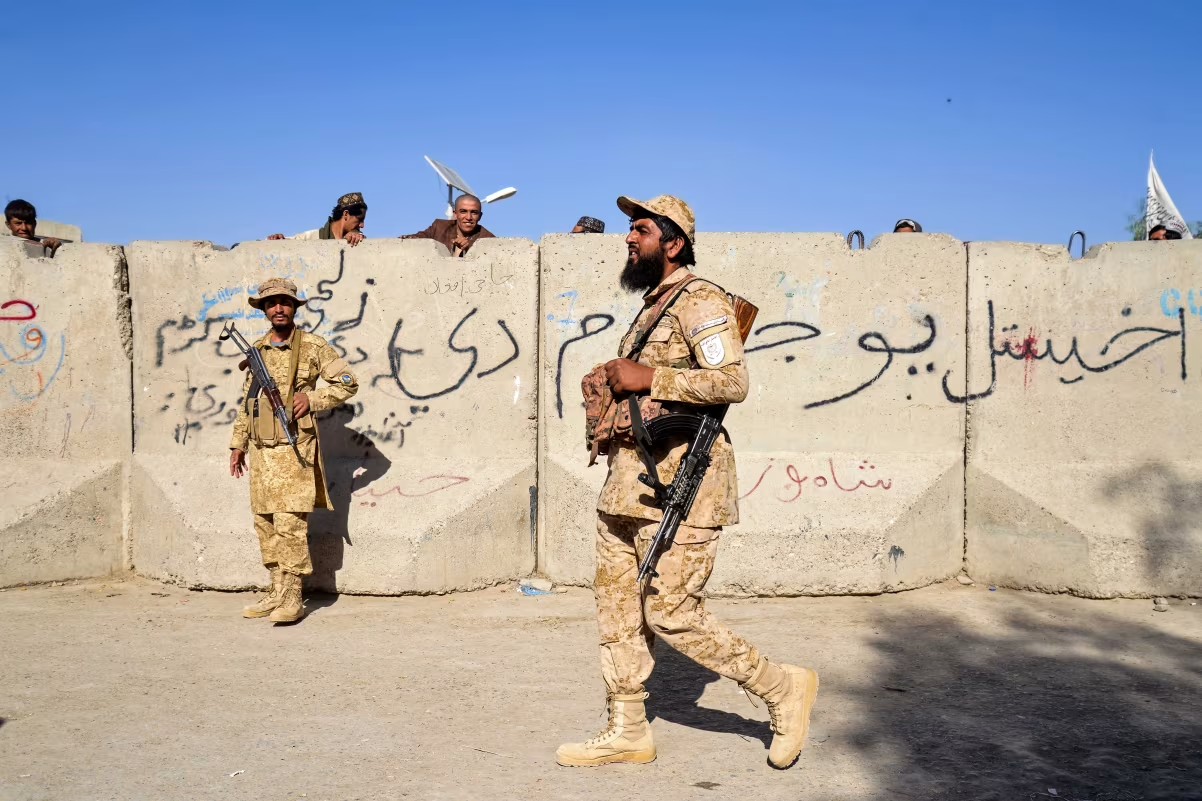
Afghanistan and Pakistan announced a 48-hour ceasefire on Wednesday after several days of intense and deadly fighting between the two neighboring countries, once close allies.
The violence followed a series of strikes last Thursday in Kabul and Paktika province, which the Taliban government accused Pakistan of carrying out. Islamabad has not officially acknowledged responsibility for the attacks.
Both nations have confirmed that the temporary ceasefire took effect late Wednesday afternoon.
Analysts warn that these clashes could mark the beginning of a new phase of instability between the two countries, whose relationship—though historically tense—has remained strategically important for decades. The escalating conflict has prompted calls for calm from China, Russia, Saudi Arabia, and Qatar, as well as an offer from U.S. President Donald Trump to mediate peace.
Sharpest Escalation in Years
The Taliban accused Pakistan of launching an “unprecedented, violent, and reprehensible” assault on targets in Kabul and Paktika last Thursday night.
While Pakistan has avoided confirming any strikes, Lt. Gen. Ahmed Sharif Chaudhry, a Pakistani military spokesperson, stated Friday that there was “evidence” Afghanistan was being used as a “base for terrorism against Pakistan.”
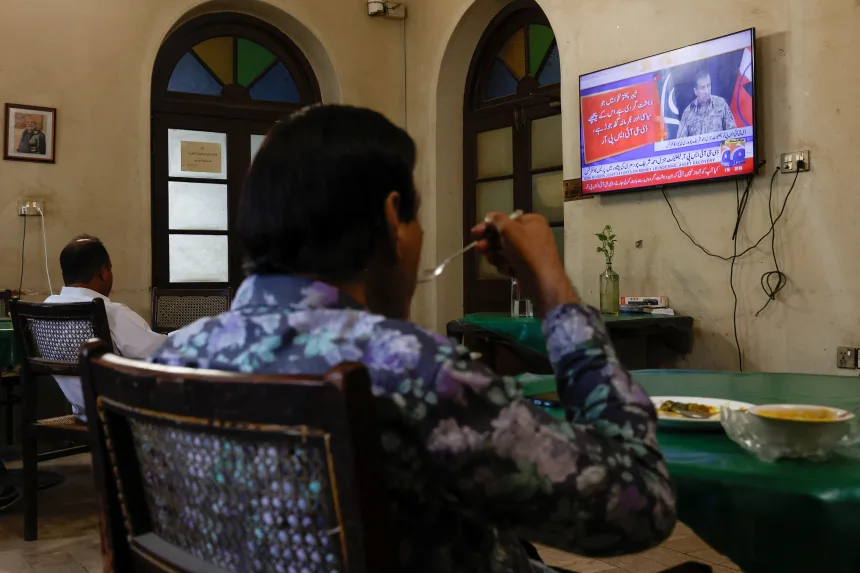
Islamabad has faced a significant increase in Islamist militant attacks since the Taliban seized control of Kabul in 2021. Pakistan has repeatedly accused the Afghan government of harboring the Pakistani Taliban (TTP)—a claim the Taliban leadership denies.
On Saturday night, the Taliban claimed to have launched retaliatory attacks against Pakistani forces in border areas near Kunar and Nangarhar provinces.
Pakistan responded with what it described as “defensive operations,” striking Taliban camps and alleged terrorist training facilities inside Afghanistan.
Both sides released conflicting casualty figures:
- Pakistan claimed to have killed over 200 Taliban and allied militants, far more than the Taliban’s reported nine fatalities.
- The Taliban asserted it had killed 58 Pakistani soldiers, more than double the 23 deaths Pakistan confirmed.
CNN has not independently verified these numbers.
Before the ceasefire took hold, around 40 people were hospitalized in Kabul after a series of explosions near the capital, according to the medical NGO Emergency. The organization reported that many had “shrapnel wounds, blunt trauma, and burns,” with five people declared dead on arrival.
The Taliban said it had ordered all fighters to observe the ceasefire “as long as no one violates it,” while Pakistan’s foreign ministry stated that both sides would use the pause to “find a constructive and peaceful solution to this complex but solvable issue.”
A Long and Complicated History
Pakistan and Afghanistan share a 1,600-mile mountainous border, known as the Durand Line, and a fraught history of territorial and political disputes.
Pakistan was once a key backer of the Taliban during its insurgency against the U.S.-supported Afghan government after 2001. The two countries also share deep cultural, ethnic, and economic ties, with Pakistan having hosted millions of Afghan refugees for decades. However, Islamabad has increasingly sought to expel refugees in recent years, citing security concerns.
The TTP, meanwhile, has become one of Pakistan’s greatest security challenges, carrying out over 600 attacks on Pakistani forces in the past year, according to data from the Armed Conflict Location & Event Data (ACLED) project.
Following Saturday’s violence, the Pakistani military warned that while it preferred diplomacy, it would “not tolerate the treacherous use of Afghan soil for terrorism.” Islamabad subsequently closed its two main border crossings with Afghanistan.
The India Factor
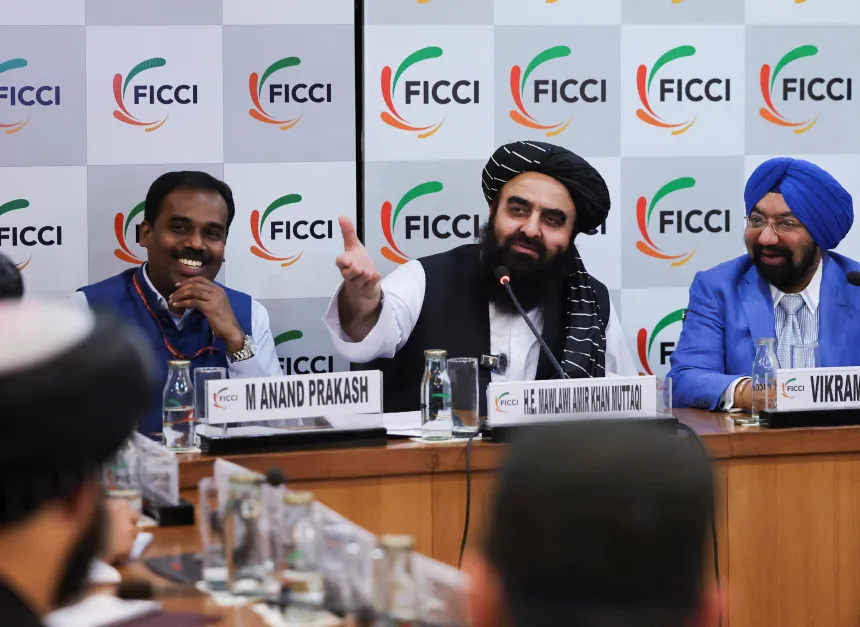
Pakistan’s military noted that the clashes coincided with a visit by the Taliban’s foreign minister to India, Pakistan’s main regional rival.
The Taliban and India openly highlighted their warming relationship, with New Delhi announcing plans to reopen its embassy in Kabul, calling the visit by Amir Khan Muttaqi “an important step in advancing bilateral ties and reaffirming our enduring friendship.”
Analysts say Pakistan and India have long competed for influence in Afghanistan, with Islamabad historically viewing strong ties to Kabul as a counterbalance to New Delhi.
“Pakistan continued to covertly support the Taliban even while publicly backing the U.S. and NATO during the War on Terror,” said Pearl Pandya, a senior South Asia analyst at ACLED.
Global Reactions
Qatar, Saudi Arabia, China, and Russia all called for restraint and de-escalation.
Qatar expressed “deep concern” about the potential for wider regional instability, while Saudi Arabia, which recently signed a defense agreement with Pakistan, urged both countries to “exercise restraint and pursue dialogue.”
Meanwhile, Donald Trump offered to mediate, telling reporters aboard Air Force One:
“I hear there’s a war now between Pakistan and Afghanistan. I’m good at solving wars — I’m good at making peace.”
What This Means for Future Relations
Although the fighting has paused for now, experts caution that tensions remain high and could easily flare up again.
“In the past, such cycles of violence have subsided once both sides made their point,” said Antoine Levesques of the International Institute for Strategic Studies. “Pakistan’s leadership still sees itself as a stabilizing force in the region.”
However, Pearl Pandya warned that the attacks on Kabul—if confirmed to have been carried out by Pakistan—would mark a serious escalation.
“This kind of strike would cross a red line,” she said. “The future of Pakistan-Afghanistan relations will depend largely on whether this incident leads the Taliban to fundamentally change how it deals with the TTP — the central source of tension between them.”

