



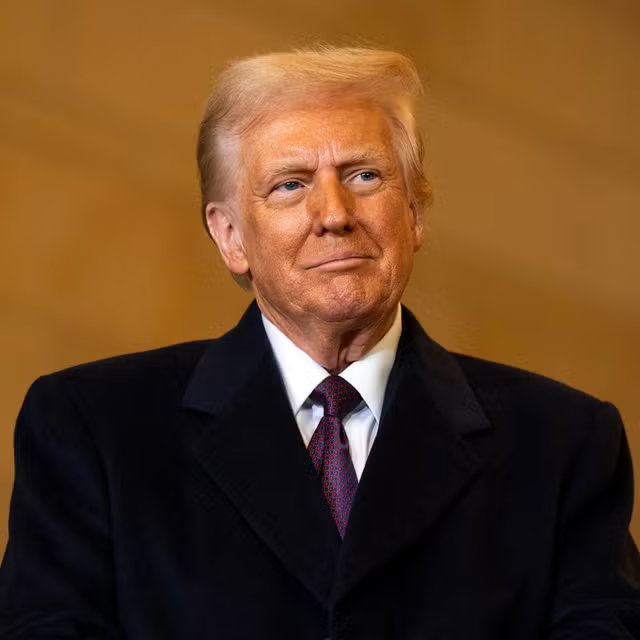
Former U.S. President Donald Trump said Wednesday that he had authorized the CIA to operate inside Venezuela to combat the illegal movement of drugs and migrants from the country but stopped short of confirming whether the agency had permission to target President Nicolás Maduro.
The statement marked Trump’s most detailed explanation yet of his decision to expand the CIA’s powers for lethal targeting and covert operations in Latin America — a move first reported by CNN last week.
According to multiple sources, Trump revised the agency’s operational authorities around the same time he signed a classified directive instructing the U.S. military to begin strikes on Latin American drug cartels earlier this summer.
Trump linked the new CIA authorization to his broader campaign against drug trafficking.
“We have a lot of drugs coming in from Venezuela, many through the sea,” Trump said from the Oval Office. “But we’re going to stop them by land too.”
Though he avoided explicitly calling for regime change, Trump said he believed Venezuela’s leadership was under growing pressure.
“I think Venezuela is feeling the heat — and so are other countries,” he said. “We’re not going to let our nation be destroyed because others want to send us their worst.”
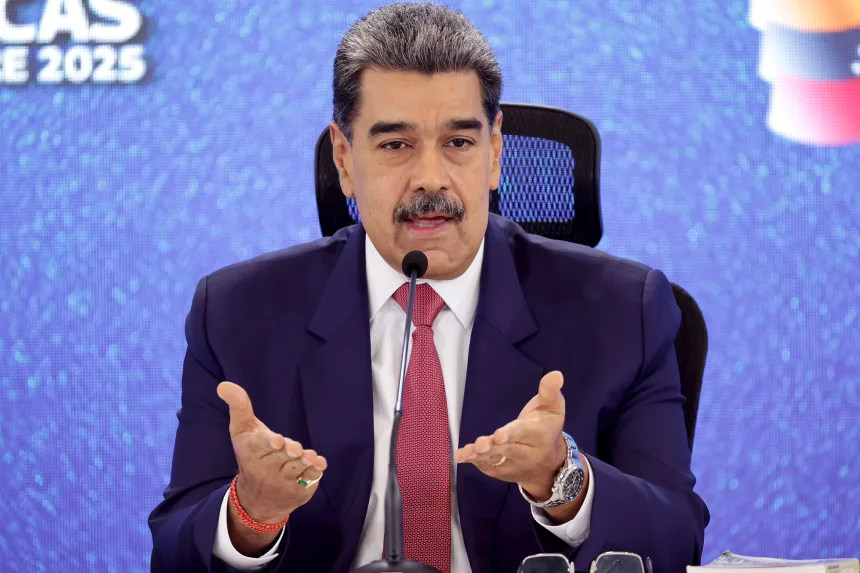
Shortly after Trump’s remarks, Venezuelan Foreign Minister Yvan Gil issued a statement condemning what he described as Trump’s “warmongering and extravagant declarations,” calling them a violation of international law.
“We are deeply alarmed by the use of the CIA and the military deployments in the Caribbean,” the statement read, labeling them acts of “aggression, threat, and harassment against Venezuela.”
Speaking on state television, President Maduro denounced the U.S. for what he called “discriminatory and xenophobic statements” comparing Venezuelans to the criminal gang Tren de Aragua, which he claimed had been “eradicated” in Venezuela.
In a message directed at Americans, Maduro said, “Not war — yes peace.”
Trump’s comments followed his announcement that U.S. forces had carried out another strike on a vessel allegedly involved in drug trafficking off Venezuela’s coast, killing six people. It was the fifth such strike announced by the U.S., intensifying tensions with Caracas. Maduro has since suggested he may declare a state of emergency to defend Venezuela from potential U.S. military aggression.
Neither Trump nor his administration has provided public evidence showing that the targeted boats were involved in narcotics trafficking. However, sources familiar with the matter said the White House relied on a classified legal opinion authorizing lethal action against a broad list of suspected traffickers and cartels.
When asked why the U.S. Coast Guard was not used to intercept shipments instead, Trump argued that past anti-drug efforts had failed.
“For 30 years we’ve done it the politically correct way — and it’s never worked,” he said.
Critics in Congress questioned the legality of Trump’s actions, warning that he might be exceeding his constitutional authority.
Senator Peter Welch (D–Vermont) said Congress was “failing its duty” by not providing oversight.
“We’ve asked for the legal justification behind these actions — and received no answer,” Welch told CNN. “The president is making unilateral decisions about who lives and dies without accountability. That’s unacceptable.”
Senator Rand Paul (R–Kentucky) also expressed skepticism, while others in Trump’s party backed his decision. Senator Jim Risch, the ranking Republican on the Senate Foreign Relations Committee, said Trump was “doing exactly what he should be doing.”
Meanwhile, Venezuelan opposition leader María Corina Machado, who recently won the 2025 Nobel Peace Prize, urged greater U.S. assistance to counter what she described as Maduro’s “war” against his own people.
In an interview with CNN’s Christiane Amanpour, Machado echoed Trump’s description of Maduro as the head of a “criminal narco-terrorist regime” and appealed for more American “help” to remove him from power.
According to Pentagon sources, at least one U.S. military strike in the Caribbean in recent months targeted Colombian nationals aboard a vessel that had departed from Colombia. The inclusion of Colombian targets, not previously reported, indicates that the U.S. campaign against alleged narcotics traffickers in the region may be broader than initially disclosed.
Source: CNN

